The St. John's Heritage Electrical Archive: Identifying Antique Wiring
If you are renovating a historic property in Georgestown, Churchill Square, Jellybean Row, or the Forest Avenue area, you will eventually open up a century-old lath and plaster wall and discover items that belong in a museum. Vinland Electrical has curated this highly detailed heritage electrical archive strictly as an educational resource to document the fascinating history of Newfoundland's early power grid. From the opening of the Petty Harbour Hydroelectric Generating Station in 1900 to the integration of modern utilities, use this digital museum to identify the antique wiring and switches hiding within our oldest local homes.
The Forest Avenue Collection & Independent Dominion Era
Why do so many antique electrical components found in heritage homes across Georgestown and Downtown St. John's bear American stamps? Because Newfoundland was an independent Dominion until 1949, our massive maritime trade routes meant early technology was frequently imported directly from the United States Eastern Seaboard.
-
Before wires were hidden inside wall cavities, heavy porcelain bases like the 1890s Bryant Cleat Socket were screwed directly to exposed beams. By the early 1900s, General Electric introduced the "Barbell" and flat rotary snap switches. Users twisted a dial, triggering a heavy internal spring that physically snapped the connection open or closed to prevent electrical arcing.
-
As electricity became standard, turn-dials evolved into early toggle switches made of dark Bakelite or heavy porcelain flush-mounts. Affluent properties also featured Edwardian rigid-stem brass pendant light drops. The brass sockets were frequently stamped "250V/250W" alongside the word "PRESS," instructing early tradesmen exactly where to squeeze the shell to access the wiring safely.
-
Early residential grids utilized stranded or solid copper wrapped in primitive rubber and thick cotton-cloth braiding, later evolving into 1940s varnished "snakeskin" wire. After decades of enduring severe winter storms and heavy coastal fog/dampness inside drafty walls, this early insulation inevitably dries out. It becomes notoriously brittle, crumbling to dust and leaving live 120V conductors dangerously exposed.
-
Decades ago, it was common practice to mount the main service meter and Edison-base glass plug fuses completely inside the house—often in a porch—to protect the delicate equipment from flash freezing and the harsh local climate. A utility worker had to physically step inside your home to read the meter! Today, safety codes strictly mandate external placement.
-
In coastal neighborhoods, 19th-century builders frequently used unwashed beach sand as a plaster aggregate, leaving tiny seashells permanently trapped inside the rock-hard walls. Early electricians navigated these dense walls using a specialized "corner brace"—a ratcheting hand tool with angled bevel gears that allowed them to manually bore thousands of holes through thick old-growth timber floor joists.
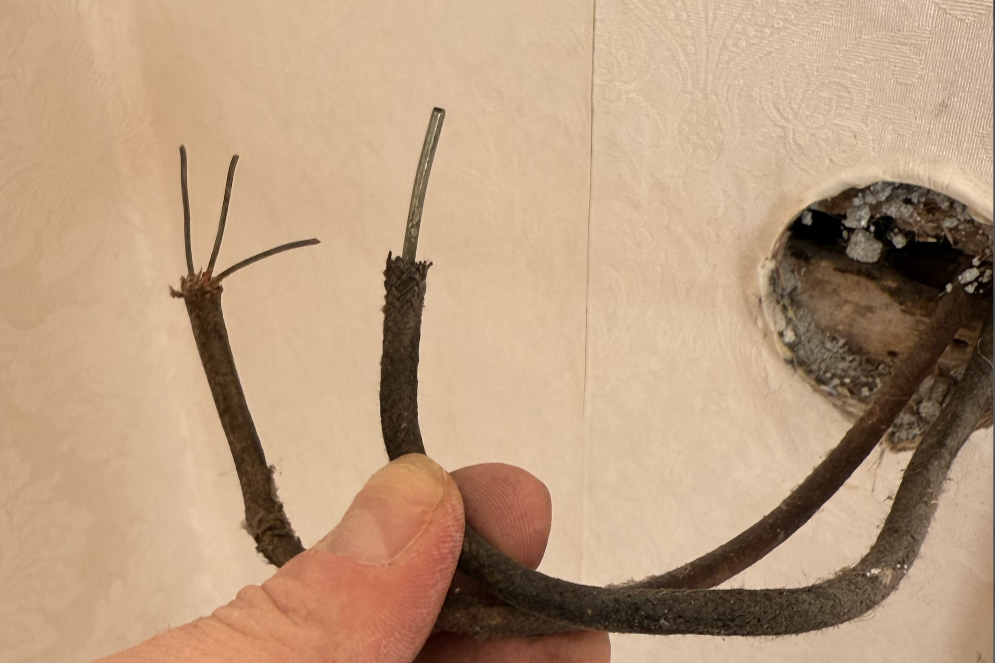
Exposed antique stranded and solid copper Knob and Tube wiring wrapped in degraded black cotton-cloth braiding, salvaged from a historic St. John's wall cavity.
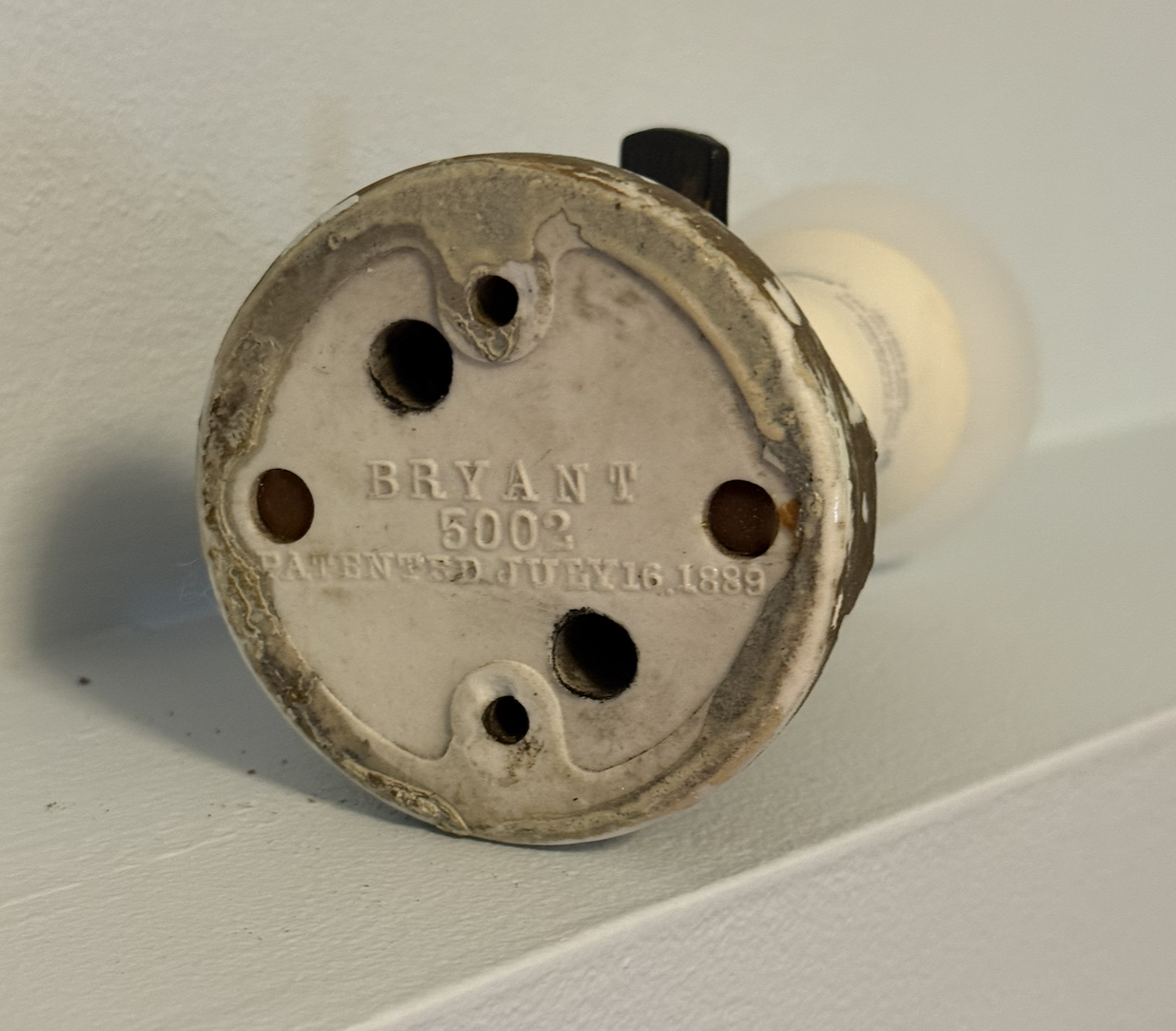
Underside view of an 1890s Bryant porcelain cleat socket, an early surface-mount electrical base showing original patent stamps and heavy ceramic mounting holes.
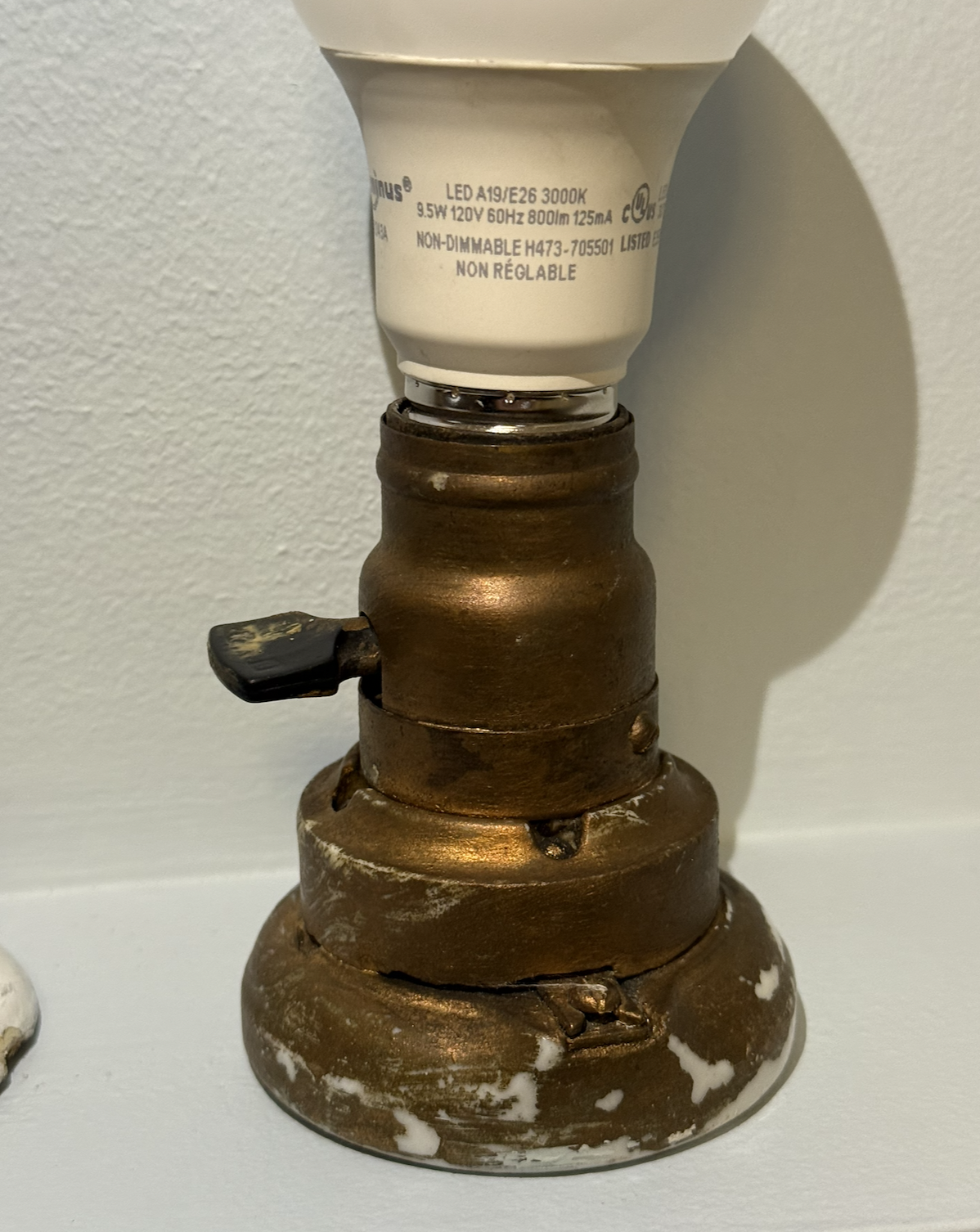
Side profile of an 1890s Bryant porcelain cleat socket featuring a heavy surface-mount ceramic base, antique brass shell, and an early black turn-key electrical switch.
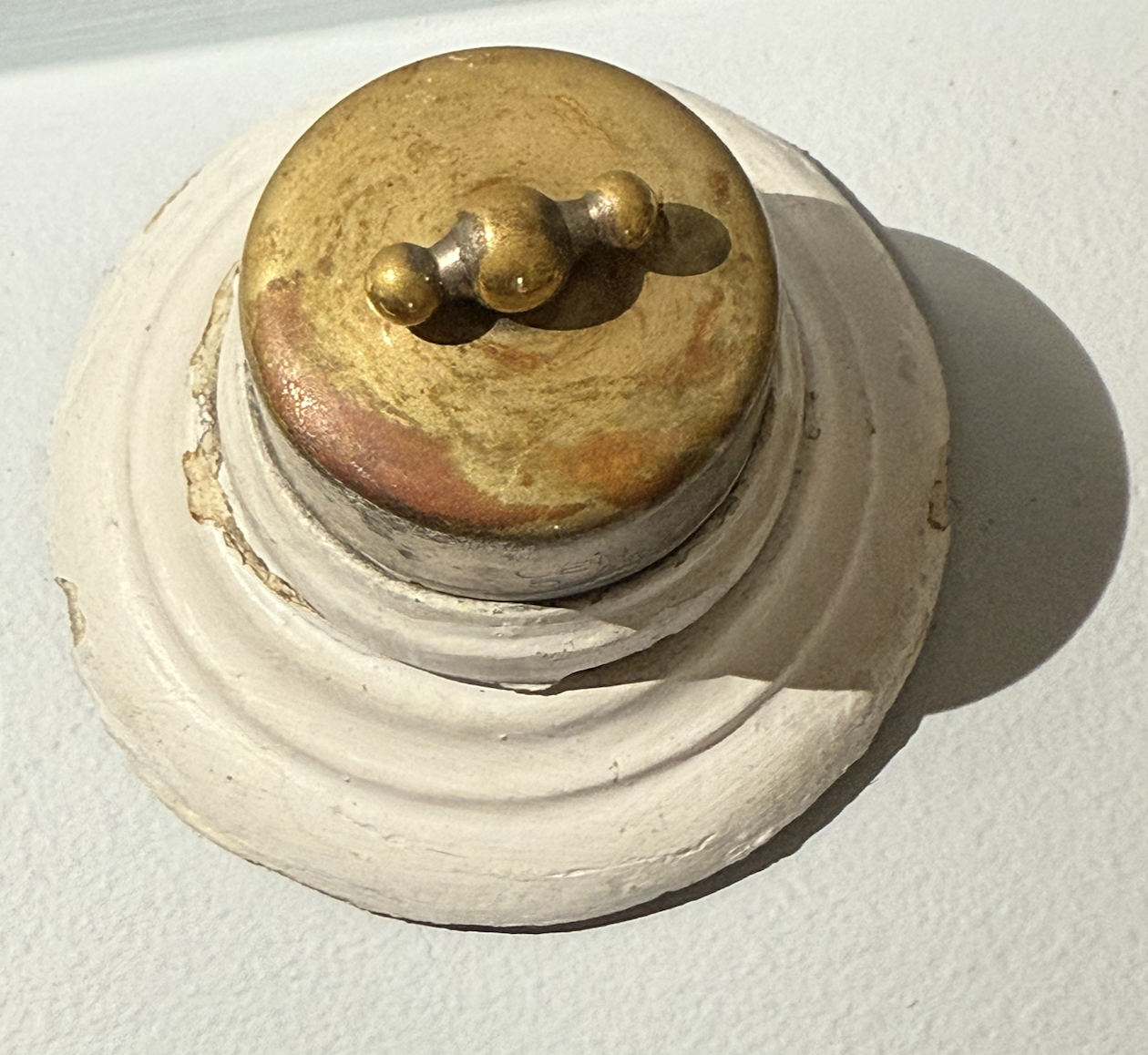
Top-down view of an early 1900s General Electric "Barbell" surface-mount rotary snap switch with a distinct solid-brass twisting handle on a painted porcelain base.
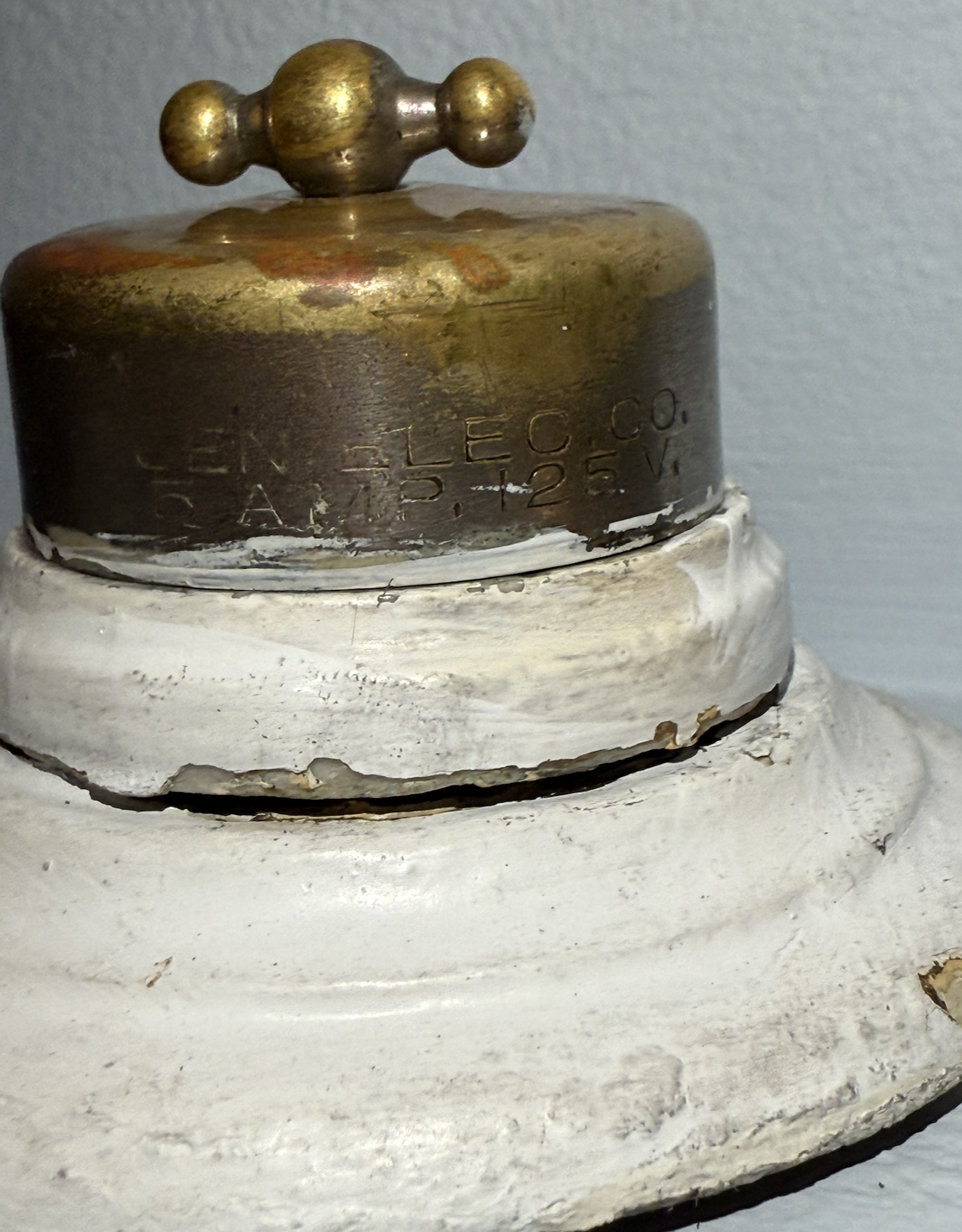
Close-up side profile of an antique GE "Barbell" rotary snap switch, highlighting the tarnished spun-brass dome resting on its thick fireproof porcelain insulator base.
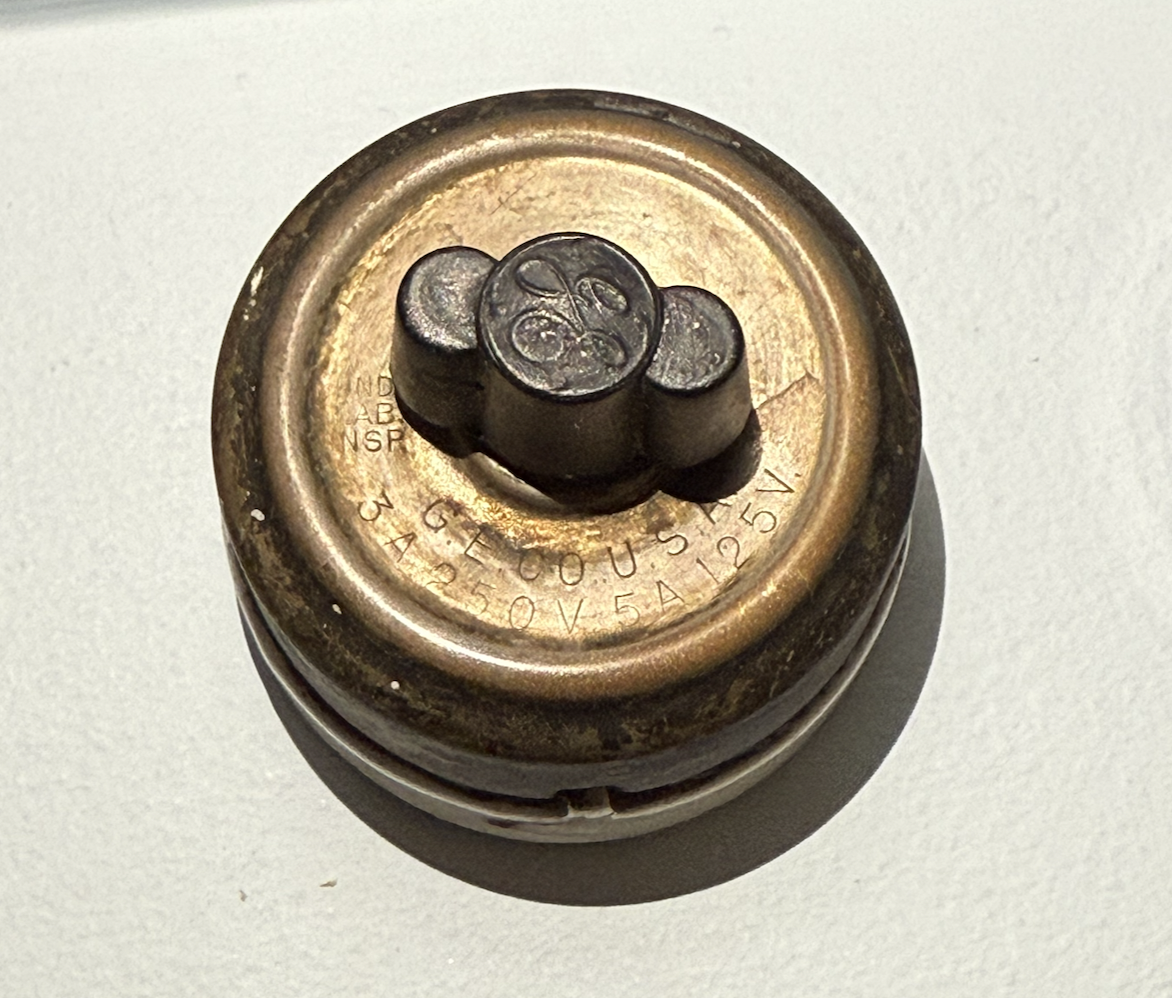
Top-down view of a 1910s General Electric surface-mount rotary snap switch featuring a flat black twist-dial and a stamped antique brass cover.
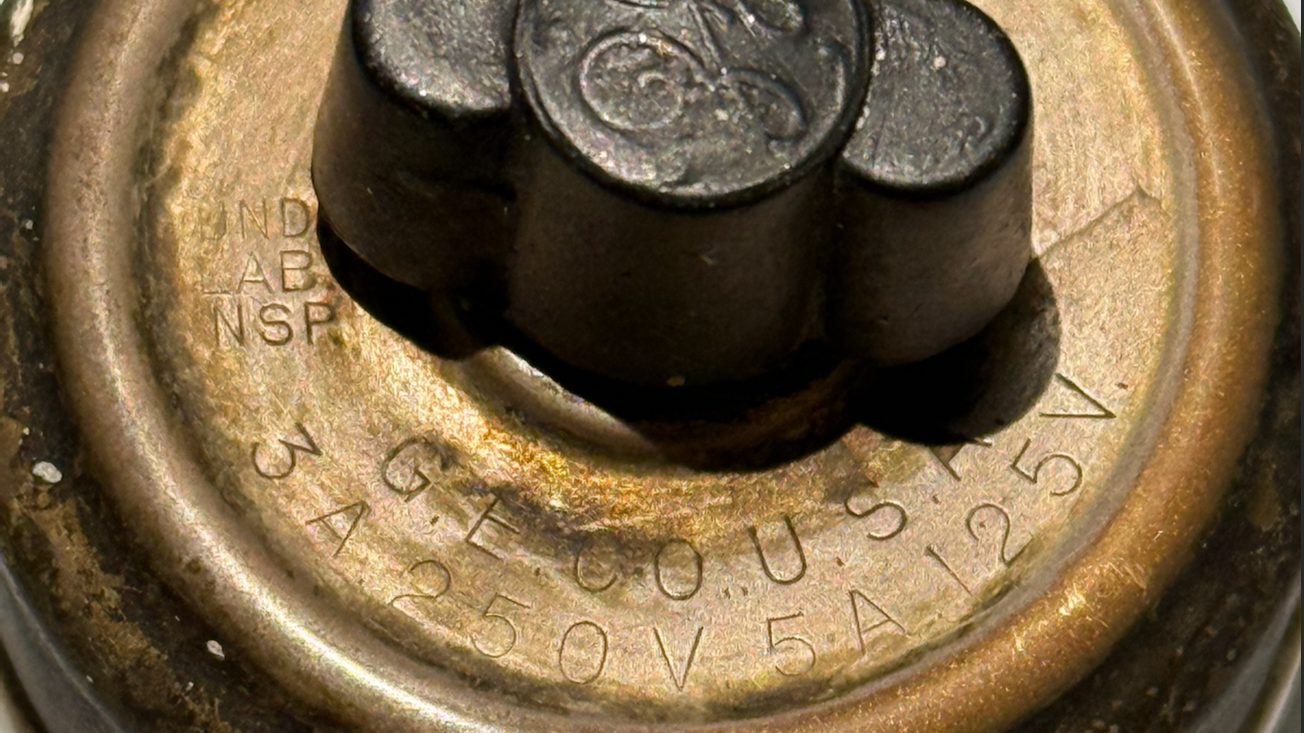
Macro close-up of a 1910s GE rotary snap switch flat dial, showing the classic cursive General Electric logo and original voltage ratings stamped into the aged brass dome.
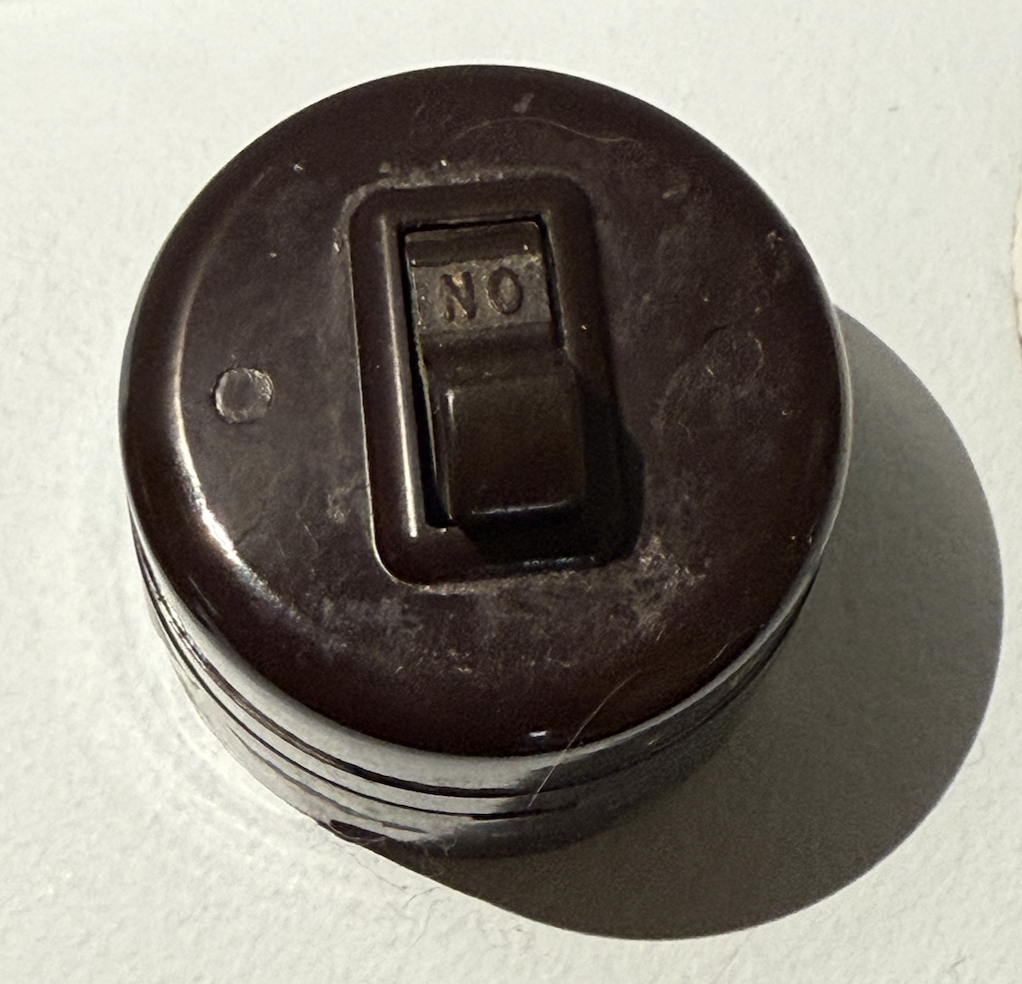
1920s dark brown Bakelite surface-mount dome toggle light switch, an early synthetic plastic component representing the architectural evolution from rotary turn-dials to modern up-and-down toggles.
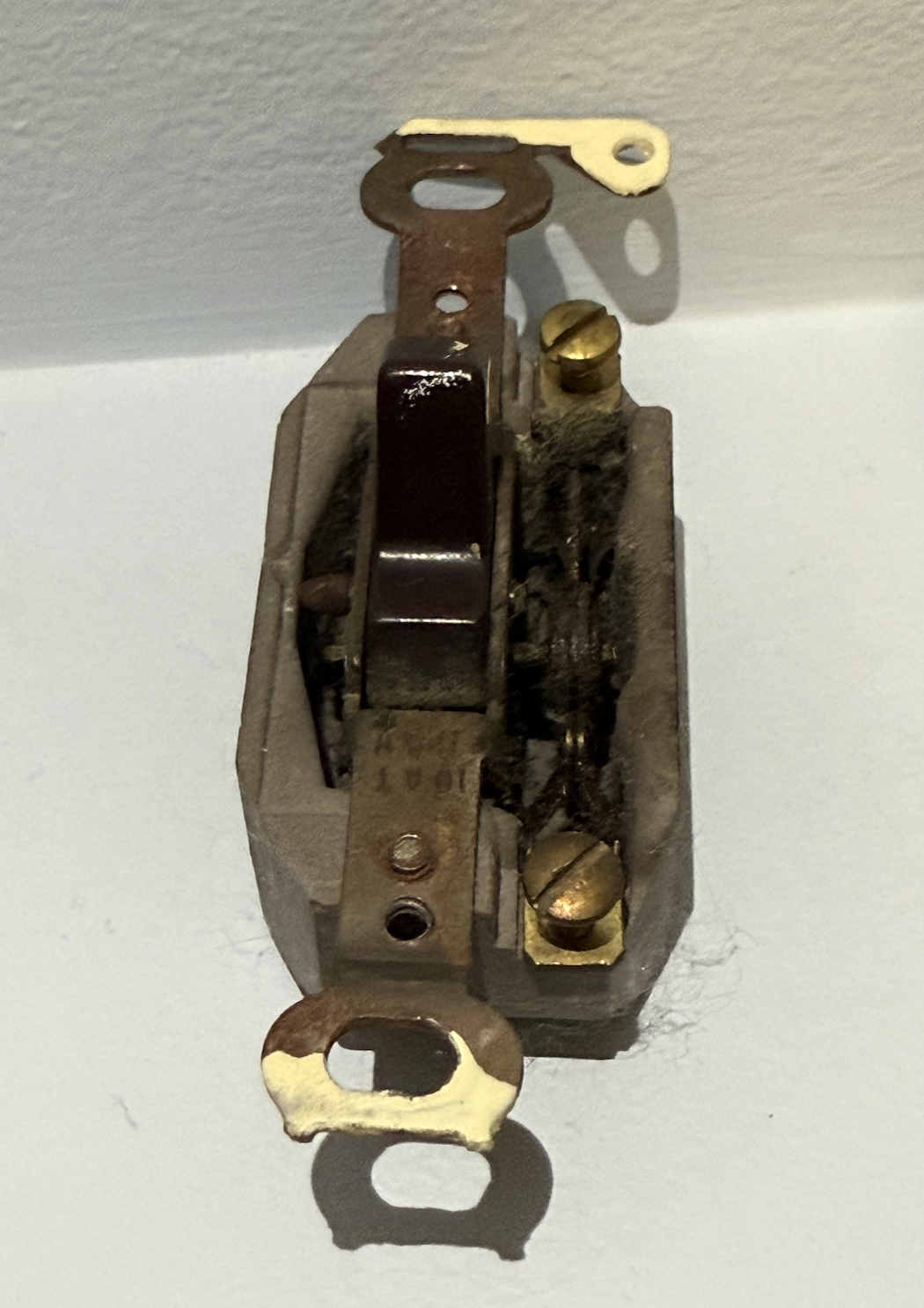
Front profile of a 1920s recessed flush-mount toggle switch mechanism showing a heavy white porcelain fireproof body, metal mounting bracket, and brass side-wiring terminal screws.
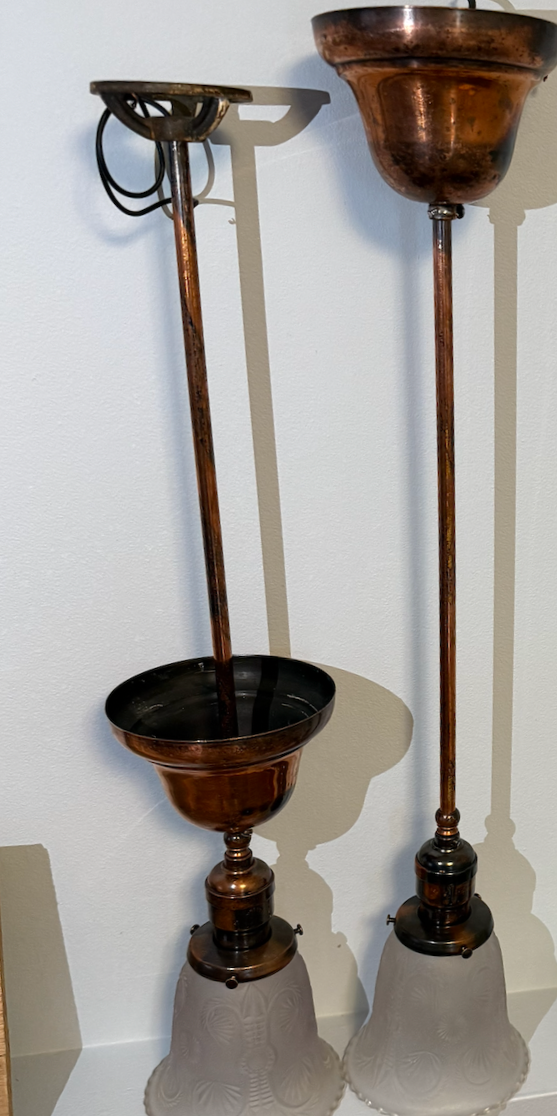
Pair of antique Edwardian rigid-stem brass pendant light drops with original ceiling canopies and acid-etched frosted glass floral shades, typical of affluent early 1900s St. John's properties.
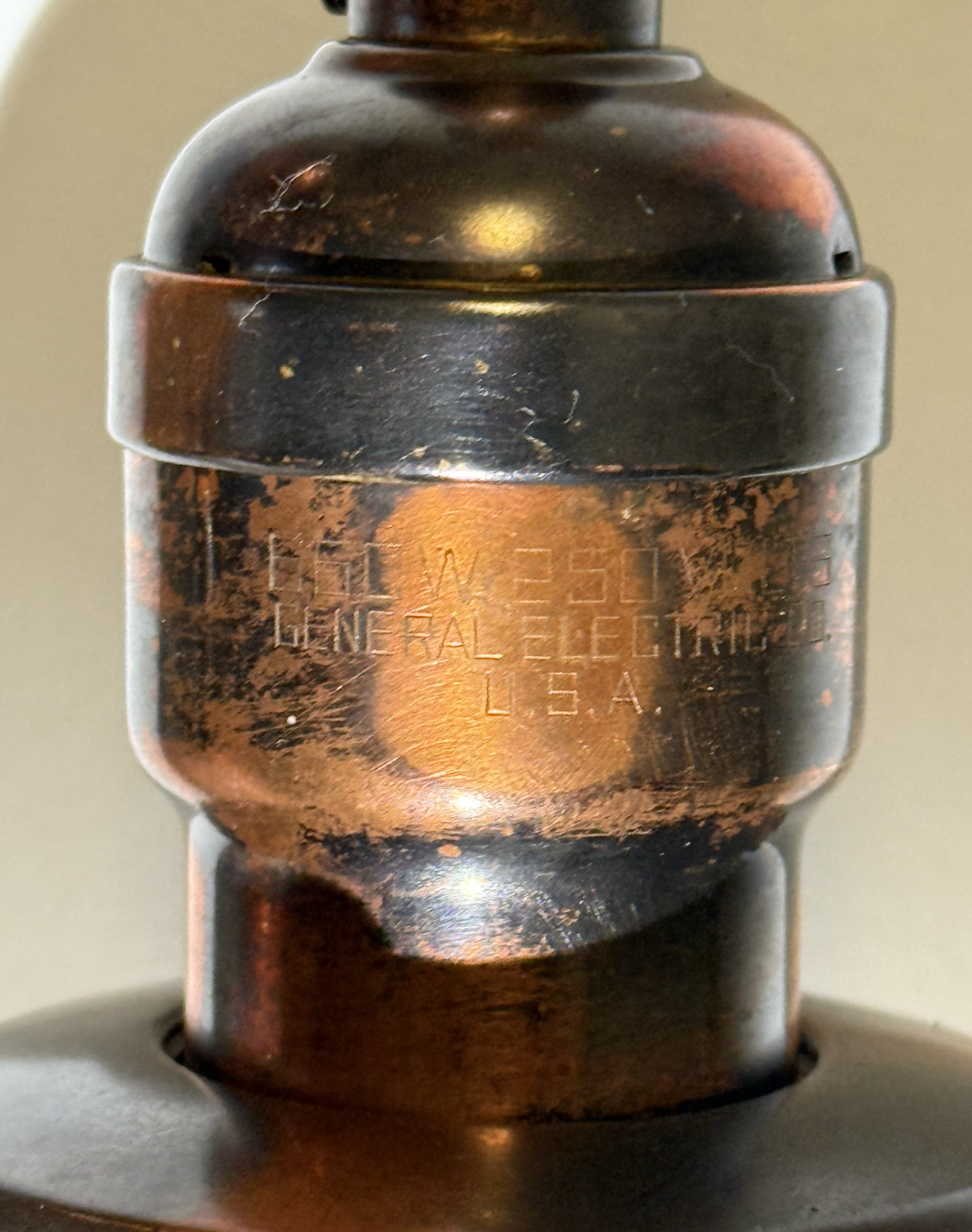
Close-up of an antique brass Edwardian pendant light socket stamped with "250V/250W" and the word "PRESS" to instruct early electricians exactly where to squeeze to safely open the shell.
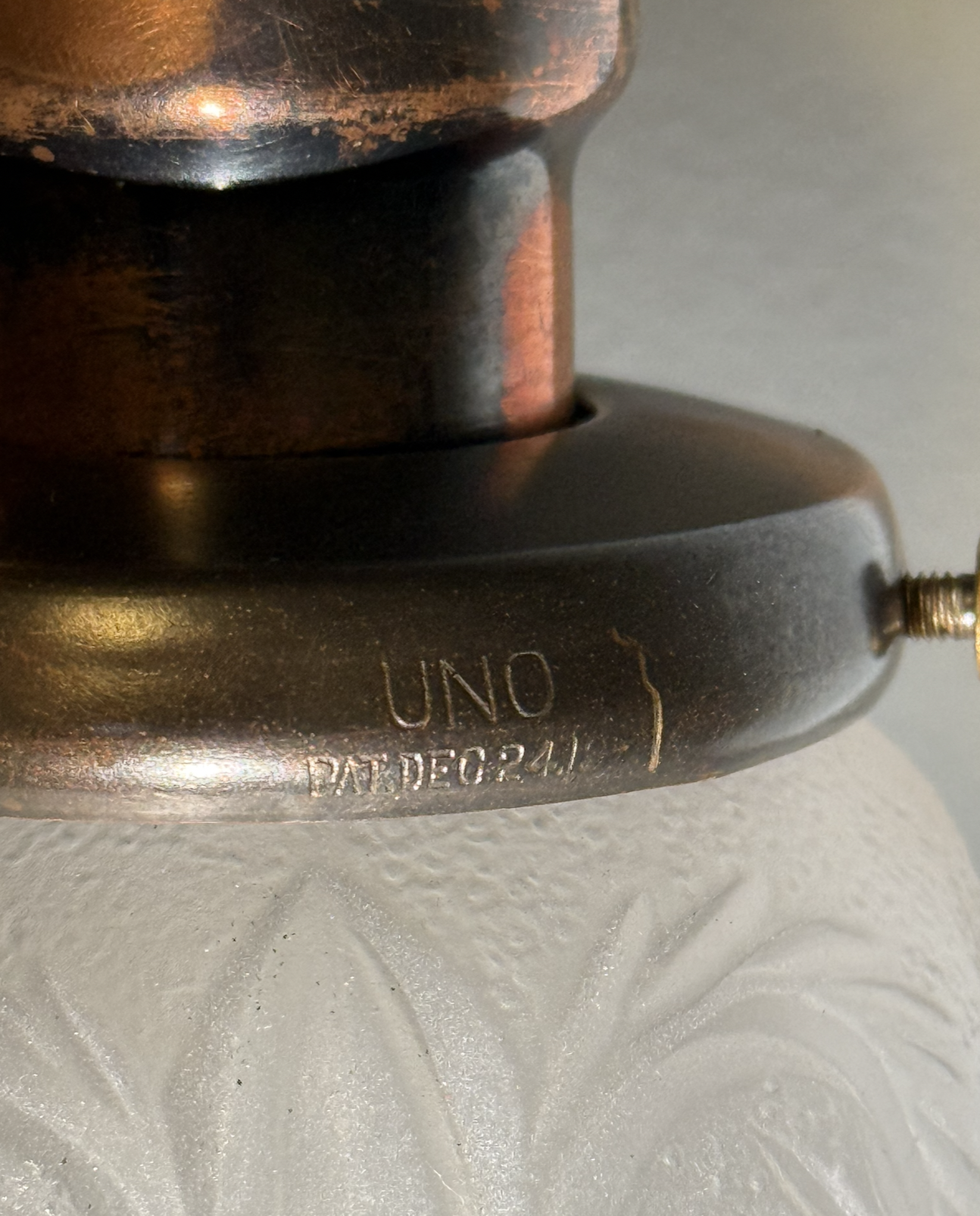
Macro view of an antique brass pendant socket showing the classic "UNO" threaded fitter ring and vintage early 1900s patent dates holding a glass shade.
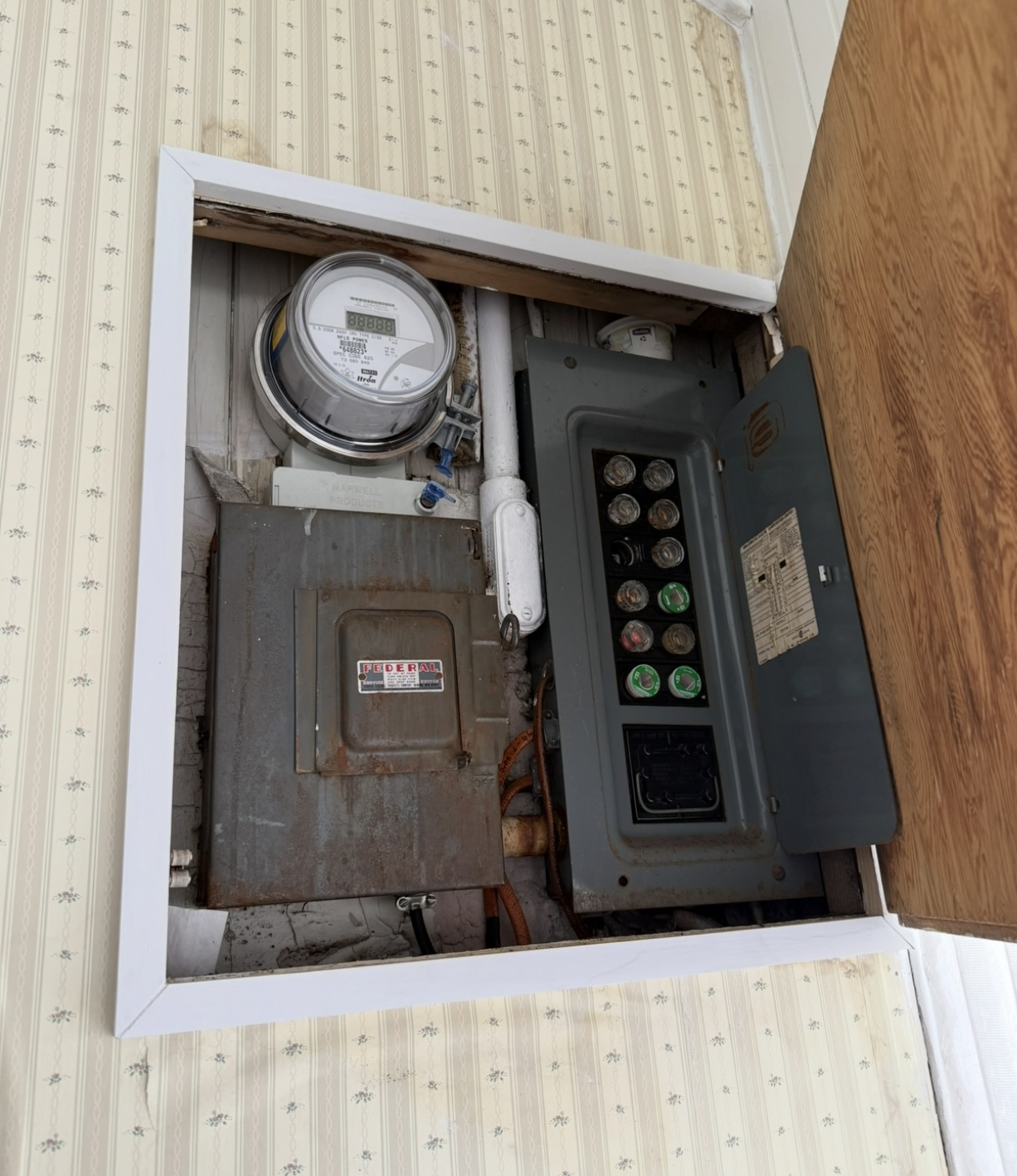
A mid-century indoor electrical setup hidden inside a wooden wall cabinet in a historic St. John's home, featuring a modern utility meter mounted above a vintage Federal disconnect switch and an obsolete panel utilizing Edison-base glass plug fuses.
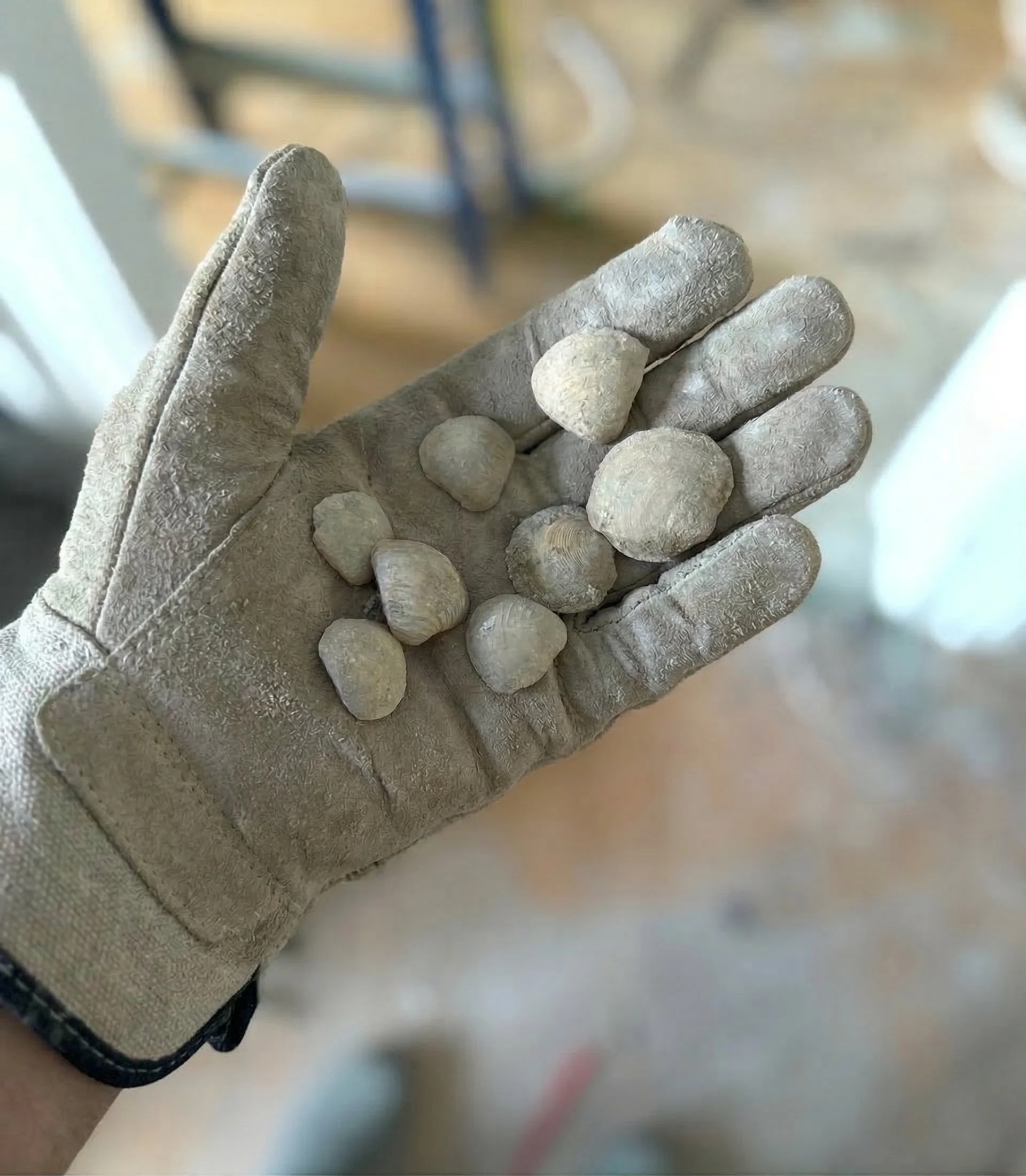
An electrician's gloved hand holding tiny seashells extracted from rock-hard 19th-century coastal lath and plaster walls, the result of early builders using unwashed beach sand as a plaster aggregate in Newfoundland heritage homes.
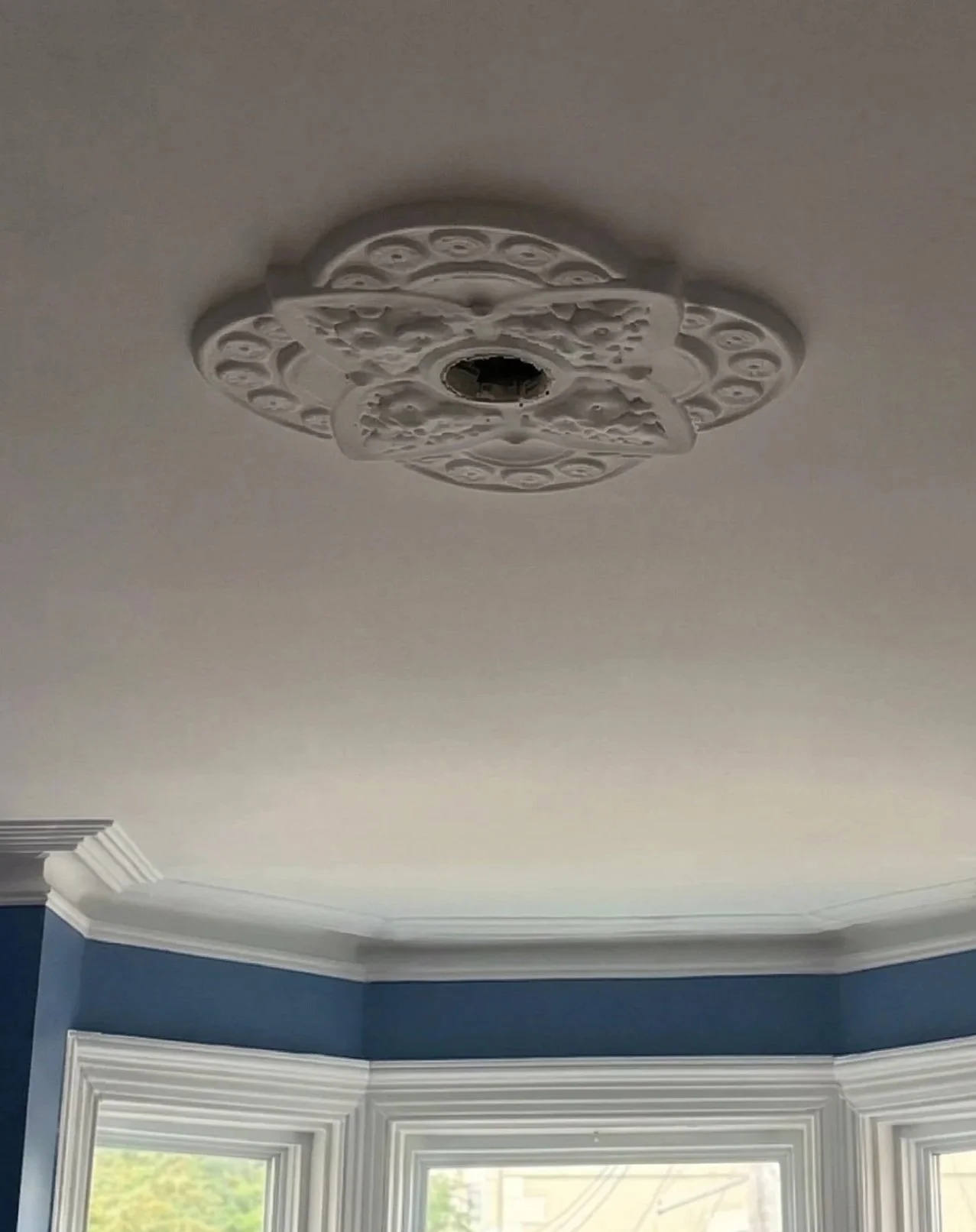
A beautifully preserved Victorian ornate plaster ceiling medallion centered above a bay window in a historic St. John's home. Originally designed to highlight grand 19th-century gas chandeliers (gaseliers) and protect ceilings from rising soot, these delicate architectural centerpieces require immense care to protect and preserve during modern electrical lighting upgrades.
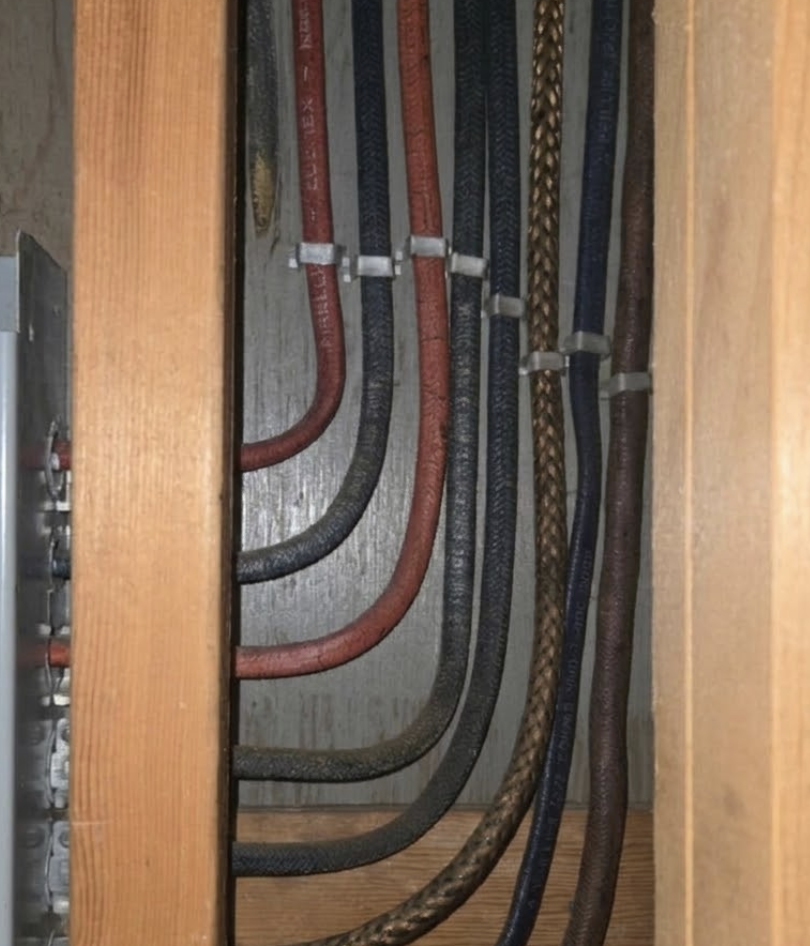
Vintage electrical wiring inside a wooden wall cavity, featuring mid-century 1940s cloth-covered "snakeskin" wire with its distinct glossy, varnished cotton jacket running alongside older cabling.
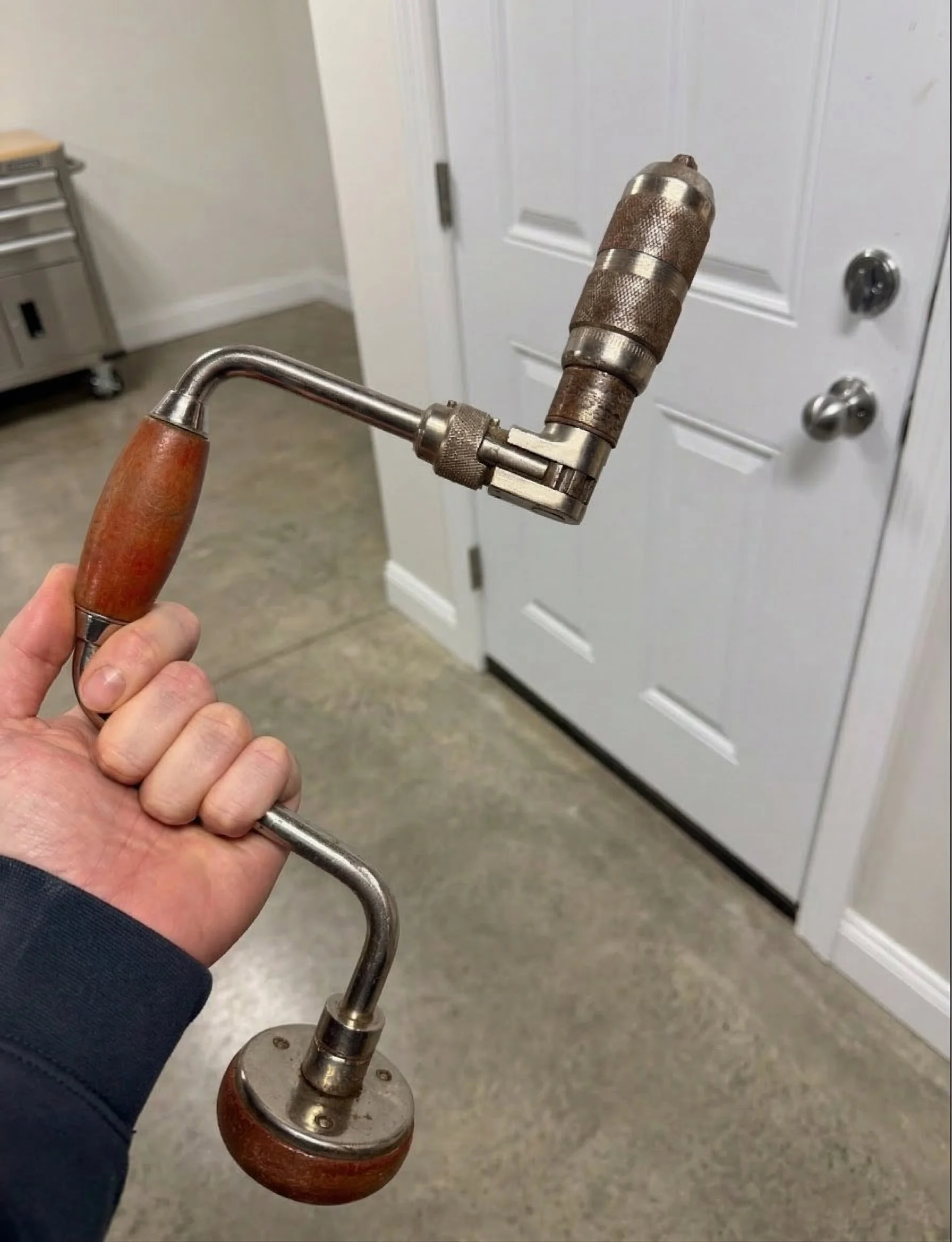
An antique early 20th-century electrician's "corner brace" hand tool, featuring angled bevel gears and wooden handles, historically used by tradesmen to manually bore wiring holes through thick old-growth timber inside tight wall cavities.
Antique Electrical Components: Safe History vs. Active Hazards
✔ Safe Historical Preservation: Keeping antique brass and glass pendant lights, but having them thoroughly gutted and rewired with modern grounded wiring by a licensed professional so they can be safely hung.
✔ Safe Historical Display: Displaying completely deactivated, dead antique Bakelite or spun-brass rotary switches as architectural salvage on a bookshelf or mantle.
✔ The Vinland Heritage Approach: We carefully map out the electrical history of your home, using advanced wire-fishing to preserve the architectural integrity of your 19th-century plaster and trim while completely modernizing the hidden wiring inside.
❌ Dangerous Hazards: Using the original 100-year-old ungrounded cloth wires inside historical light fixtures, which have become brittle and prone to short-circuiting.
❌ Active Code Violations: Leaving a 1910s surface-mount switch connected to live 120V household current. These lack modern grounding and fail current Service NL and Newfoundland Power safety codes.
❌ Standard "Rip-and-Tear" Upgrades: Generic contractors who treat a heritage house like a modern build, destroying valuable historical moldings, original ceiling medallions, and lath/plaster to run standard modern wire.
Frequently Asked Questions (FAQ)
-
No. Original 1890s–1920s surface-mount rotary and toggle switches completely lack modern grounding and fail current safety standards set by the Canadian Electrical Code. While they make beautiful architectural salvage to display on a bookshelf, they should never be connected to live voltage. They are strictly deactivated historical remnants.
-
Originally designed to highlight grand gas chandeliers (gaseliers) and protect ceilings from rising soot, these ornate plaster rings were later retrofitted for electricity. Preserving these bone-dry, century-old centerpieces highlights the incredible architectural art of the Edwardian and Victorian eras found in historic areas like Rabbittown and Quidi Vidi, though modernizing their hidden wiring requires immense care.
-
It depends on whether the wires are live or dead. If you uncover remnants of active/live knob and tube wiring behind your baseboards in The Battery or elsewhere, it is a severe fire hazard. Because the early rubber casing degrades and becomes extremely brittle over time, modern insurance brokers require its safe removal by a licensed professional. However, if an electrician confirms the wire is completely deactivated and dead, treat it as a delicate historical artifact. In that case, the safest approach is to leave it untouched inside the wall cavity as a fascinating record of our architectural past.
Preserving Newfoundland's Electrical History
This archive is maintained purely for educational and historical purposes. We are deeply passionate about preserving the rich history of our province's early electrical infrastructure and the unique architectural legacy hiding behind the walls of properties across the Avalon Peninsula.