The Exploding Kettle Mystery
Can I plug a kettle or microwave into an extension cord or multi-plug adapter? No. High-draw kitchen appliances like kettles, toasters, and microwaves pull up to 1500 watts of power. Plugging them into cheap extension cords, vintage triple-adapters, or aging knob-and-tube wiring can cause the connections to overheat, melt, and create a severe fire hazard. Always plug heat-generating appliances directly into a dedicated, properly grounded wall receptacle.
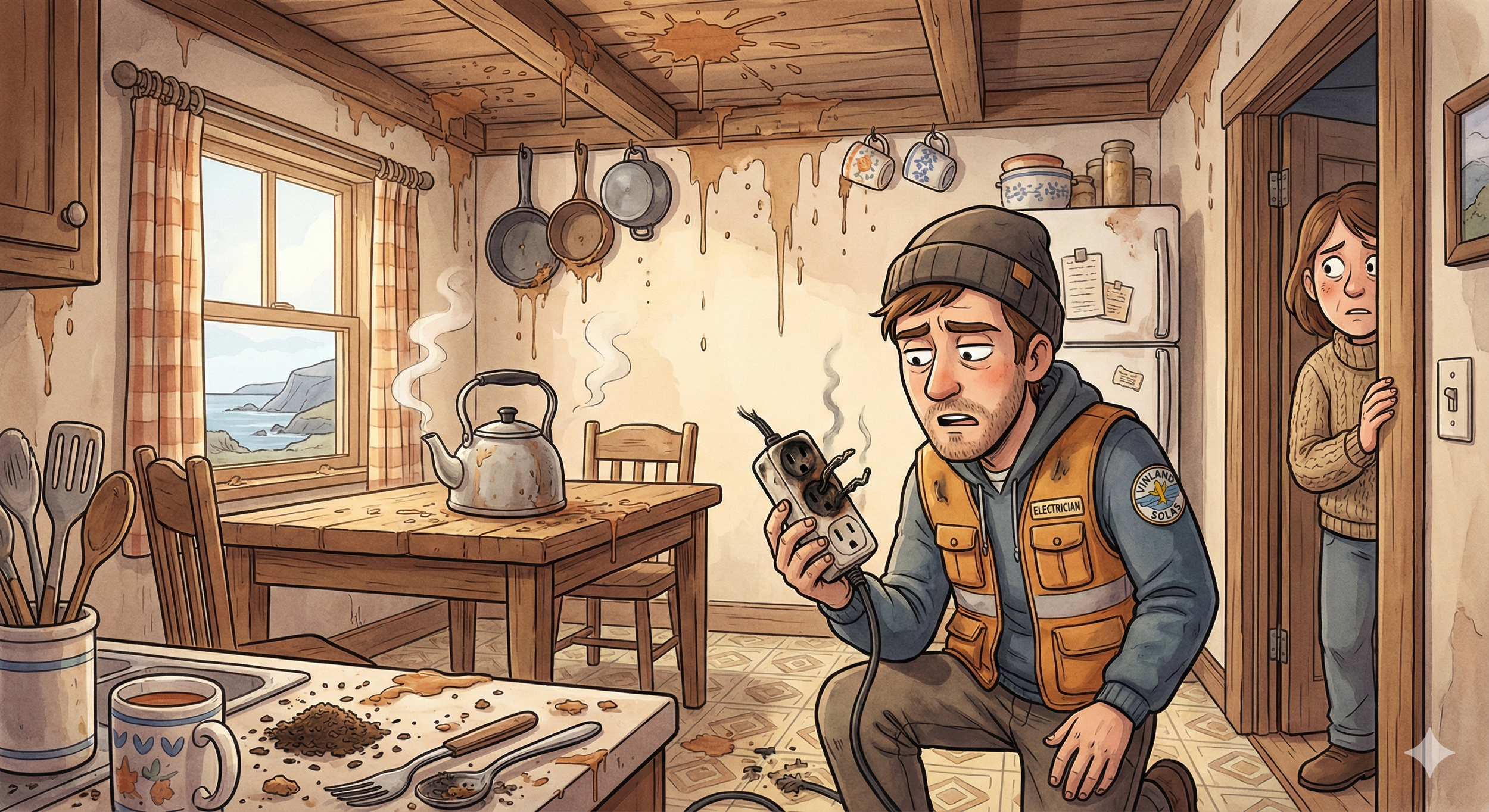
You ever walk into a kitchen and the homeowner whispers, "Don't touch the kettle, she'll blow again"? No? Well. I have.
The Yarn
When I arrived, the homeowner was standing in the kitchen holding a kettle like it was an unexploded cannonball. Tea stains decorated the ceiling in a way that suggested the kettle had recently attempted a vertical escape.
He whispered—actually whispered—"Don't touch the kettle, b'y. She'll blow again."
I raised an eyebrow. "What exactly happened?"
He pointed upward. "She sneezed boiling water... right up there."
As I got closer, the kettle let out a soft hiss that sounded vaguely resentful, like it remembered the incident and blamed everyone but itself. The original line—"The poor kettle 'sneezed' boiling water when the old wiring arced"—was no exaggeration. The scorch marks on the counter told the tale.
I unplugged the mess from the wall and immediately saw the issue: the entire counter circuit was wired with ancient knob-and-tube that someone had spliced into lamp cord—actual lamp cord, the kind used for $10 table lamps from the flea market. To make things worse, the kettle had been plugged into a triple-adapter so old it might've been smuggled out of a museum.
The whole setup was basically a polite electrical fire waiting for an invitation.
As I traced the wiring backward, I found brittle insulation, loosened splices, and a breaker that had long ago given up on its responsibilities. The arcing happened whenever the kettle drew heat—which meant the kettle wasn't exploding on purpose; it was reacting to a miniature lightning storm hiding in the wall.
I shut off the power and rewired the counter properly.
Brand new outlet.
Proper gauge wire.
No more lamp cord acting like a hero.
When we plugged the kettle back in and brought it to boil, it hissed normally—not violently—and the homeowner let out a shaky sigh of relief.
"She didn't blow," he whispered, as if speaking too loudly might anger it.
"No," I said, "and she won't again unless you plug her back into that antique adapter."
He held it up between two fingers. "This thing's going in the garbage."
Good choice.
💡 Local NL Homeowner Tip: Safe Kitchen Power
Ditch the Adapters: Never use bargain-bin multi-plugs or extension cords for heat-producing appliances.
Check for Heat: If your kitchen outlet feels warm to the touch, crackles, or your plug wiggles loosely, unplug everything immediately and call a certified NL electrical contractor to replace it.